|
|
Penarth Dock, South Wales - the heritage & legacy . . . |
|
|
Penarth Dock, South Wales - the heritage & legacy . . . |
 |
|||||||
 |
Volume Two - The Era of Optimism, Investment & Development - Coal and coal export logistics . . .
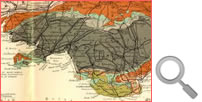
Between these two types of coal and at greater depth is the famous Welsh steam coal with its carbon content between 91-93%. Steam coal displays the qualities of anthracite coupled with the friable nature of bituminous coals. Larger coals produce small quantities of clinker, intense heat, low smoke and very little ash in comparison with smaller grades.
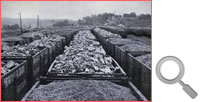
For efficient loading at the docks, wagons would have to arrive in sequence, together at the correct coal tip which had been allocated by the dock-master for a particular ship for a defined period of time. This rarely occurred and the skill of the shunters was challenged to extricate the appropriate wagons from the sidings in the order prescribed. Ships were often delayed or even refused entry to port until the wagons were found. A further complication was that the smaller collieries in particular would send wagons full of unsold coal to the port with the intention of finding buyers with ships in the meantime. Destination dockets were inevitability often poorly or blatantly incorrectly labeled and more often than not found in the incorrect location or lost when the coal was finally sold. Also the shunters had to ensure that the empties were returned to the correct train for the colliery. |
||||||
| Introduction | |||||||
| Contents | |||||||
| Search this site | |||||||
| Contributions | |||||||
| Links | |||||||
| Recent Updates | |||||||
|
|||||||
| | volume 02 | chapter 04 | page 01 | << previous page << | index to volume two | >> next page >> | | |||||||
|
|||||||