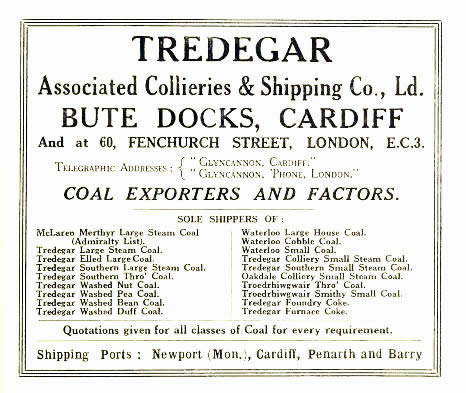
In the 1920s, South Wales coal exporters and factors were the companies and agents connecting the collieries of the South Wales Valleys to the home and global markets via the ports of Cardiff, Penarth, Barry and Newport, etc. They operated in general from the Coal Exchange of Bute Road, Cardiff. These middlemen faced a turbulent decade influenced by a post-WWI boom, over-production of coals, labour unrest and strikes, coupled with intense international competition and the effects of war reparations.
The 1920s Boom & Bust: The early 1920s saw a brief shipping boom with over 120 shipping companies operating out of the port of Cardiff, however, the decade was marked by a steady collapse in demand due to the conversion of coal to oil fired boilers for shipping coupled with other sources of cheaper coal. During WWI the priority was to provide fuel to our warships and supply vessels, hence, existing markets were left wanting and progressively found alternative sources for their energy needs.
Reparation Coal: A major factor working against the South Wales exporters and factors during the 1920's was the Treaty of Versailles, which forced Germany to supply free coal to Allied countries ; this included France, which was formerly an important market, thus, destroying Wales's traditional European export markets.
Major Exporters : The South Wales trade was dominated by vertically integrated companies that often owned coal mines, export firms, and their own fleets of merchant ships. Companies included Cory Brothers & Co. Ltd., Guéret, Gait & Co. Ltd., Instone & Co. Ltd., Locket & Judkins., Guest, Keen & Nettlefolds (GKN), as well as the Tredegar Associated Collieries & Shipping Co., Ltd. as per the above advertisement.