|
|
Penarth Dock, South Wales - the heritage & legacy . . . |
|
|
Penarth Dock, South Wales - the heritage & legacy . . . |
|
Index to Volume Seven - The People - Dock Family Trees - Engineers, Artisans & Doers . . . |
|||
|
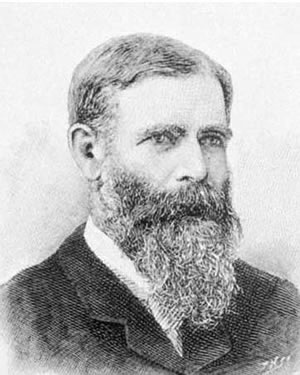
James Henry Greathead (1844-1896)
During the construction of this line compressed-air was employed to prevent the inrush of water; and the success of this plan led to its adoption in other similar enterprises in which he was engaged. He invented apparatus for the application of water to excavate in front of the shield, and for injecting cement-grout behind the lining of the tunnel. In 1888 he became joint engineer with Sir Douglas Fox for the construction of the Liverpool Overhead Railway, which was visited by the members of this Institution on the occasion of the Liverpool Meeting in 1891. He was engaged as joint engineer with W. R. Galbraith and Mr. W. R. Galbraith on the Waterloo and City Railway; and on the Central London Railway he was associated with Sir John Fowler and Sir Benjamin Baker. He did not live to see the completion of these undertakings, his death taking place at Streatham on 21st October 1896, at the age of fifty-two. He became a Member of this Institution in 1879; and was also a Member of Council of the Institution of Civil Engineers. [016] The London Gazette published notifications relating to a patent taken out by him in 1874. "1738 - To James Henry Greathead, of No.2, Storey's-gate, Westminister, in the county of Middlesex, for the invention of "improvements in constructing tubular tunnels or subways and apparatus for that purpose." London Gazette [100] 29th May 1874 and 29th September 1874. The Engineer published the text of the patent number "1738 - Tubular Tunnels or Subways, J. H. Greathead, Storey's-gate, Westminister - dated 16th May 1874. This invention relates to a method of and the apparatus for constructing tubular tunnels or subways. A shield, having a cylindrical flange projecting backwards so as to overlap the forward part of the tunnel casing, has through it holes with stuffing boxes and spherical joints, through which tools are protruded to disintegrate the soil in front, and has also through it pipes for ejecting water or air under pressure and other pipes, by which the disintegrated material is suspended in water, or in case of dry sand, in air, is forced back into receptacles behind the shield. The shield front may also be made with doors or manholes, or in cells or compartments, and may be provided with an air chamber behind, supplied with air under sufficient pressure to exclude water from the cells during work. As the space in front of the shield is cleared it is forced forward by screw jacks or hydraulic presses abutting on the tunnel casing behind, and the casing is extended within the flange of the shield. The casing may be of iron or other metal in voussoir segments bolted together, or of iron frames filled in with cement or concrete, or of artificial stone, cement or concrete blocks previously moulded and built in their places with temporary clamps to secure them. the joints may be made tight by leather or other yielding material, which may serve also to make a tight fit to the flange of the shield. The spaces left by the withdrawal of this flange is filled with liquid cement injected through holes in the tunnel casing." The Engineer [015] [016] 4th December 1874. |
|||