|
|
Penarth Dock, South Wales - the heritage & legacy . . . |
|
|
Penarth Dock, South Wales - the heritage & legacy . . . |
 |
|||
 |
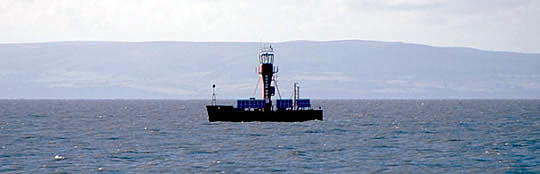
Volume Eight - Pre-Victorian to the present day - more aspects - A brief history of Trinity House lightvessels . . In an effort to reduce the heavy cost of running the fleet Trinity House embarked on a long term scheme for replacing some lightvessels by other devices. The LANBY (the 40-foot-across Large Navigational Buoy) and the innovative Royal Sovereign Lighthouse were two such replacements. In October 1972 an experimental scheme commenced at the Smith’s Knoll Lightvessel for transferring the crew by helicopter, intended to improve the efficiency of the reliefs and the conditions of the personnel involved. When it became safe and reliable to do so, the lightvessels were converted to automatic unmanned operation, and eventually solar power replaced the diesel engines. The traditional lightvessel is by no means redundant, however, as over the years it has proved itself to be an important and valuable aid to navigation. Today (2015) :- Trinity House currently maintains eight automatic lightvessels and over 400 buoys. Major floating aids such as these are normally moored to mark shoals and sandbanks which extend for many miles offshore beyond the sight of landmarks and which when covered pose great dangers for the mariner. Trinity House lightvessels and lightfloats are still predominantly red in colour so that they are conspicuous in daylight. [273] [274] |
||
| Introduction | |||
| Contents | |||
| Search this site | |||
| Contributions | |||
| Links | |||
| Recent Updates | |||
|
|||
| | volume 08 | chapter 01 | page 040 | << previous page << | index to volume eight | >> next page >> | | |||
|
|||