|
|
Penarth Dock, South Wales - the heritage & legacy . . . |
|
|
Penarth Dock, South Wales - the heritage & legacy . . . |
 |
|||||
 |
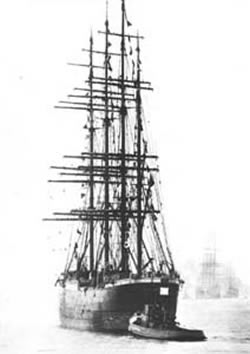
Volume Eight - Pre-Victorian to the present day - more aspects - Pamir and Passat - the end of an era . . .
Many years later at the end of the Second World War, she was chartered out as a training ship to Federal Germany’s merchant navy, an activity in which she undertook many voyages of instruction. The Shipwreck - In 1957, on the eve of southern Spring, the Pamir sailed from Buenos Aires, her bowsprit pointing towards Germany. It was a day on which the cheeks of the fair-skinned lads glowed as they worked the windlass to weigh anchor. |
||||
| Introduction | |||||
| Contents | |||||
| Search this site | |||||
| Contributions | |||||
| Links | |||||
| Recent Updates | |||||
|
|||||
| | volume 08 | chapter 02 | page 200 | << previous page << | index to volume eight | >> next page >> | | |||||
|
|||||