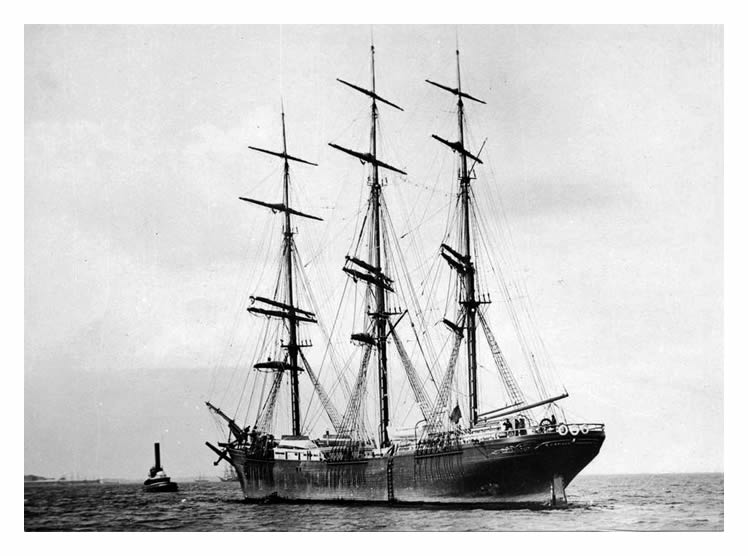
1908 - The Romance of Wreck - Raising by Frank T. Bullen - By the Aid of Empty Barrels.
'Another Instance which came under my own notice was that of a large ship called the E. J. Spicer, which ran ashore in the Basin of Minas, near Capo Split. She was a soft wood vessel of Nova Scotian build, and apparently those interested in her thought her case hopeless, for they sold her as she lay, for a trifling sum, to an energetic man of my acquaintance.
The place where the Spicer lay fairly comfortable was visited twice a day by a tremendous rise of tide—which, I may say in passing, is one of the most potent factors in the multifarious operations of wreck raising. Because of the cost of bringing material there my friend did not attempt to repair the ship where she lay, although she was high and dry twice a day, but he purchased a very large number of empty petroleum barrels, carefully bunged, which he secured in her hold and shored down from the between deck so securely that they could not shift.
At last when it was evident that a little more buoyancy would lift her up he rushed a large number of barrels on hoard at low water, and all was secured well before high water time. She floated, although there were huge rents in her bottom all round. She was sailed across the basin to a small shipyard, was repaired, loaded with lumber and within eighty days of the time my friend had taken her in hand delivered at once her cargo in London and him out of his difficulties.' - Irvington Gazette [834] [835] 13 March 1908
Presumably once the vessel arrived at London she was unloaded of her cargo of wood, examined, condemned and then sailed to Penarth to be broken up commencing October 1908.
Why Penarth was chosen remains a mystery - any ideas anyone? |