|
|
Penarth Dock, South Wales - the heritage & legacy . . . |
|
|
Penarth Dock, South Wales - the heritage & legacy . . . |
 |
|||||
 |
Volume Thirteen - Pre-Victorian to the Present Day - even more aspects - Slavery - echoes of the past . . . .
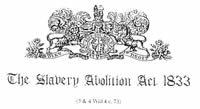
About 55,000 claimed and c.46,000 slave owners in Great Britain were compensated for the loss of their 'assets.' A database of these claimants and former slave owners has been collated and following a few simple searches I found that the family links to the Missions to Seamen at Penarth required further investigation since it was probably a beneficiary of the proceeds of slavery. I shall attempt to qualify this statement later in this chapter. The reality is that the wealth accumulated by the proceeds of the slave trade in the period 1660 to the 1850's, including returns upon imported sugar, molasses, tobacco, rum, coffee, cotton, copper ore, etc., coupled with the compensation payments under the 1833 Act, is a key element responsible for London becoming the world's Victorian financial hub and much of the funding for the industrial revolution in the UK is attributable to the proceeds of investors who had made their wealth, or inherited, monies directly related to slavery. How many and how much money came from such sources for construction of the Glamorganshire Canal, the four Merthyr ironworks, the South Wales coalmines and associated infrastructure, the Taff Vale Railway, etc., and our Penarth Harbour, Railway and Dock Company for example is unknown, but a substantial percentage, in my humble opinion, was highly lightly to have originated from the source discussed. British 'Capitalism' was built on the slave trade and our institutions were central to it. Eleven Governors and at least sixteen Directors of the Bank of England owned slaves or received incomes during the 18th and 19th centuries. The Royal Bank of Scotland, Lloyds Bank, HSBC, Barclays Bank, and the Royal Mail all have historic links to slavery. In June 2022, the Archbishop of Canterbury apologised after research showed the Church of England's investment fund has links to the slave trade. A charity managing the Church's investment portfolio, revealed that for more than 100 years the fund invested in a company responsible for transporting slaves. The fund, known in the 18th century as Queen Anne's Bounty, formed in 1704 to assist needy clergy, is now a £10.1bn investment trust. |
||||
| Introduction | |||||
| Contents | |||||
| Search this site | |||||
| Contributions | |||||
| Links | |||||
| Recent Updates | |||||
|
|||||
| | volume 13 | chapter 02 | page 020 | << previous page << | index to volume thirteen | >> next page >> | | |||||
|
|||||