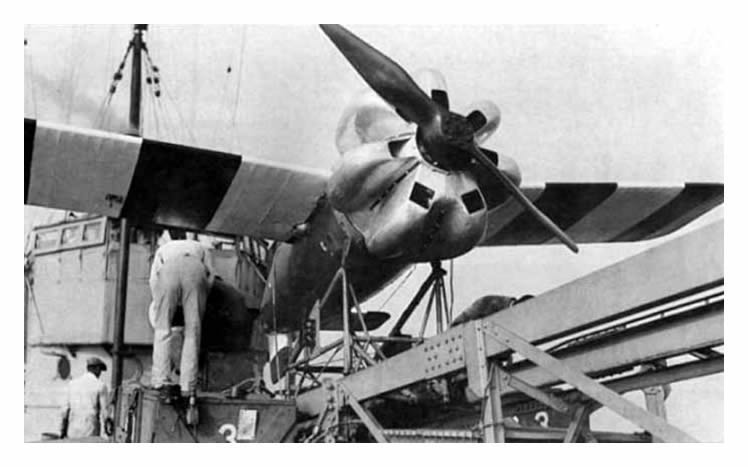
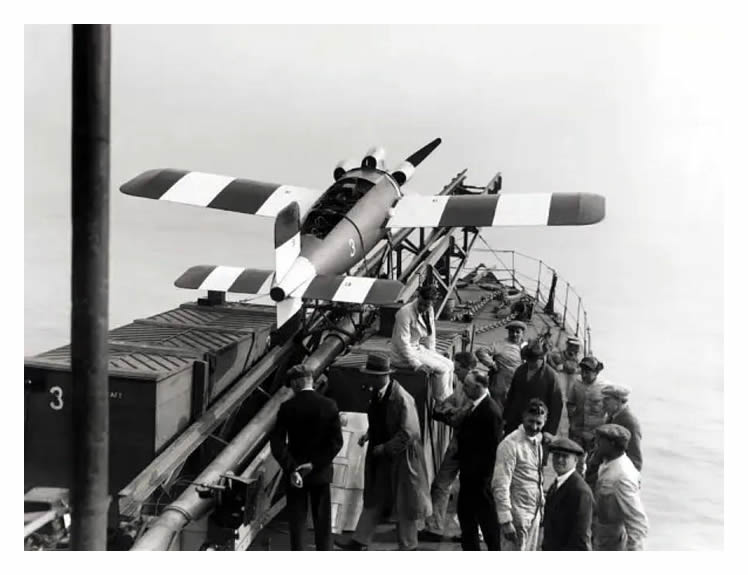
The Larynx, or the Long Range Gun with Lynx engine, being a pilotless aircraft intended as a guided anti-ship or long-range attack weapon, carrying a potential 250lb bomb a distance of up to 300 miles which was guided by an autopilot system. It was launched from a cordite-fired catapult installed on the forward deck of the S-class destroyer HMS Stronghold. The Larynx was powered by a 200 horse-power Armstrong Siddeley Lynx IV radial piston engine.
The initial tests in 1927 were conducted in the Bristol Channel, off Steep Holm. Later trials were moved to Iraq for secrecy. On 20th July initial test the Larynx crashed into the Bristol Channel shortly after launch due to a catapult trolley malfunction. Later tests proved more successful but the program eventually lost momentum and was abandoned in the 1930s, partly due to the high secrecy surrounding it and the focus shifting to target drones. The RAE Larynx is considered a significant, albeit unsuccessful, early example of a cruise missile concept, a precursor to later developments like the German V-1 flying bomb.
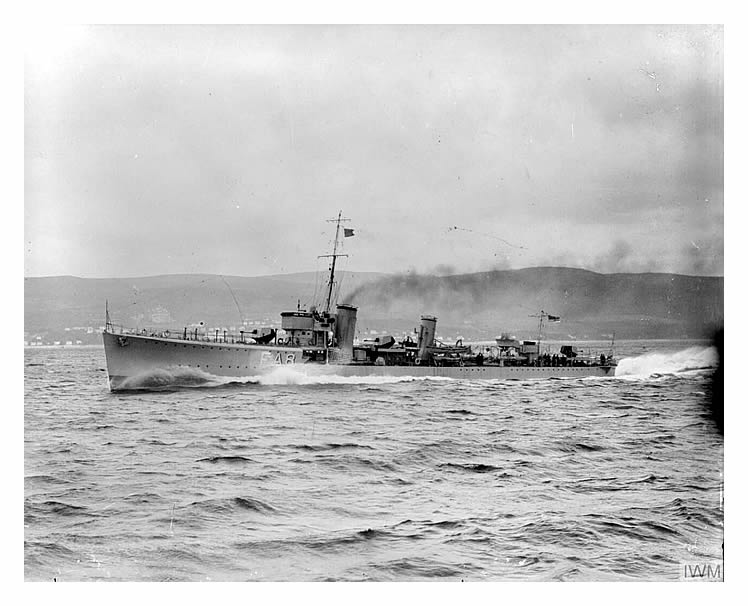
H.M.S. Stonghold was a 276 feet long, 1,100 ton, S-Class Destroyer built at the Scott's Shipbuilding & Engineering Company of Greenock, Scotland, and launched during May 1919. She was lost in 1942. The photograph above was taken during speed trials on the Firth of Clyde off the west coast of Scotland. [IWM Cat. No: SP 2497] [266] |