|
|
Penarth Dock, South Wales - the heritage & legacy . . . |
|
|
Penarth Dock, South Wales - the heritage & legacy . . . |
 |
|||||
 |
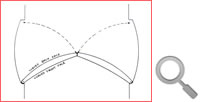
Volume Twelve - Pre-Victorian to the Present Day - further aspects - Report upon Penarth Dock - 1984 . . . 4.1 - General Details The lock and sea entrance at Penarth Dock represented the most difficult part of the construction work. This was due to the fact that, like most lock and sea entrances, they had to be built to withstand large differences in water level. This was caused, in the case of the lock, by filling and emptying the lock chamber and in the case of the sea entrance by the rise and fall of the tide. It was important to construct both the lock and sea entrance in such a way that water did not penetrate beneath the foundations and undermine them. Normally this would have been achieved by building the foundations down to a watertight strata, however, in the case of Penarth Dock which was particularly of a alluvial nature this would probably have been impossible. Instead the foundations were probably enclosed within sheet piling in order to minimise the movement of water beneath them. There were three main parts to both the lock and sea entrance. These were the gates, the floor and the side walls. 4.1.1 - Gates Although the gates at Penarth Dock are not directly relevant to the context of this document they obviously influenced the design of both the lock and sea entrance and therefore a brief discussion of their features is included. There were four pairs of iron gates at Penarth Dock when it was originally opened. The front and back of each gate was curved although when they were closed they met at a point rather than forming a continuous curve. For this reason they were of a type of gate known as a 'gothic arch' gate, see figure 12.
|
||||
| Introduction | |||||
| Contents | |||||
| Search this site | |||||
| Contributions | |||||
| Links | |||||
| Recent Updates | |||||
|
|||||
| | volume 12 | chapter 13 | page 210 | << previous page << | index to volume twelve | >> next page >> | | |||||
|
|||||