|
|
Penarth Dock, South Wales - the heritage & legacy . . . |
|
|
Penarth Dock, South Wales - the heritage & legacy . . . |
 |
|||||||
 |
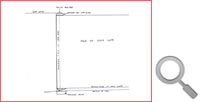
Volume Twelve - Pre-Victorian to the Present Day - further aspects - Report upon Penarth Dock - 1984 . . . The very bottom of each gate, however, was straight and constructed of very hard timber called Greenheart. This was done to enable the bottom of the gate to form a watertight seal against the cill of the lock or sea entrance. Like most lock gates those at Penarth Dock were not hinged along their entire height, but only at the extreme top and bottom. The bottom of the gate was hinged by means of a pivot set into the bottom of the gate recess upon which the gate rested. The top of the gate was firmly tied against the back of the gate recess by means of an anchor positioned level with the top of the quay. The edge of the gate bearing against the back of the gate recess is known as the heel-post and in the case of the gates at Penarth Dock was made from timber, see figure 13.
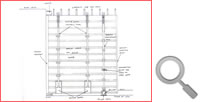
In order to supplement this method of support the bottom of each gate was fitted with a roller which prevented the gate from sagging and loosing it's watertight seal against the back of the gate recess. These rollers were adjustable from the top of the gate to counteract the effect of wear on the roller. Each gate was also equipped with at least one (and possibly two) small sluices positioned near the bottom of the gates. These too could be opened and closed from the top of the gate, see figure 14.
|
||||||
| Introduction | |||||||
| Contents | |||||||
| Search this site | |||||||
| Contributions | |||||||
| Links | |||||||
| Recent Updates | |||||||
|
|||||||
| | volume 12 | chapter 13 | page 220 | << previous page << | index to volume twelve | >> next page >> | | |||||||
|
|||||||