|
|
Penarth Dock, South Wales - the heritage & legacy . . . |
|
|
Penarth Dock, South Wales - the heritage & legacy . . . |
 |
|||||||||
 |
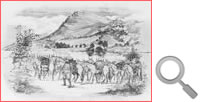
Volume Twelve - Pre-Victorian to the Present Day - further aspects - The River Ely Iron Ore Wharf . . . The transportation to and from these 'northern outcrop' works was problematic since railways had not evolved much beyond mules and horses pulling wooden trucks on iron or stone based tramways or, alternatively, hauling goods the old way i.e. over the ancient packhorse routes in waggons each carrying two tons, attended by a man and a boy. Soon the local supplies of raw materials were exhausted and the development of efficient transportation systems became vital to this iron industry.
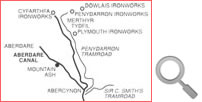
But the Glamorganshire or Cardiff Canal wasn't just successful, it was too successful and chronic congestion became at its worse between Merthyr and Abercynon! It wasn't until February 1804 that the railway revolution commenced nearby Merthyr with the first steam-hauled goods-train running on L shaped, cast-iron plate-rails, each being one yard long and weighing 56 lbs. installed at a nominal gauge of 4ft. 2in., being 4ft. 4in. overall, which were originally laid at a gradient of 1 in 145 and without sleepers so that horses could pull the wagons with hooves in mind. The Cornish engineer Richard Trevithick (1771-1833) and Samuel Homfray (1762-1822), owner of the Penydarren Iron Works, were responsible for this technological innovation which was indeed the first steam locomotive to run on rails towing a heavy mineral load and passengers anywhere on planet earth! |
||||||||
| Introduction | |||||||||
| Contents | |||||||||
| Search this site | |||||||||
| Contributions | |||||||||
| Links | |||||||||
| Recent Updates | |||||||||
|
|||||||||
| | volume 12 | chapter 11 | page 011 | << previous page << | index to volume twelve | >> next page >> | | |||||||||
|
|||||||||